Starlink Mini vs Standard: Which Is Right For You?
Home, business, caravan or weekends away? We look at the differences between Starlink options and where each one makes sense.
Starlink has quickly become one of the most popular ways to get fast, reliable internet in areas where the NBN doesn’t reach, or as a backup when it drops out. But “Starlink” now covers more than one kit, and the right choice depends heavily on how and where you plan to use it. Here’s how the Mini and Standard kits actually differ, and which one fits your situation.
The Short Version
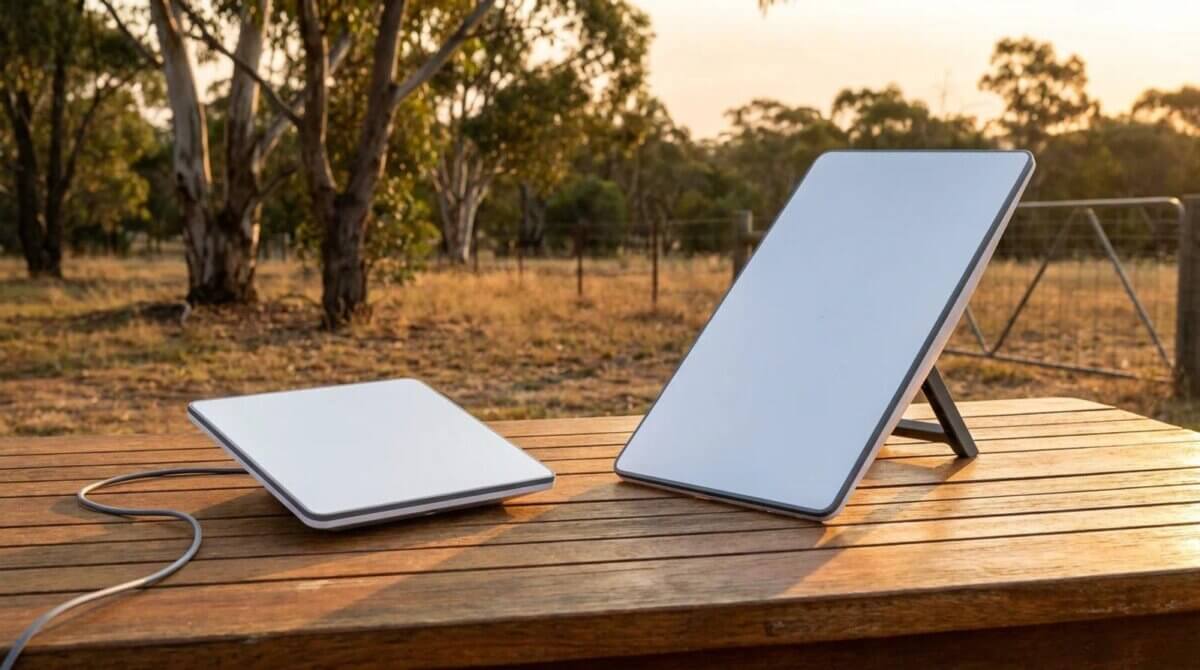
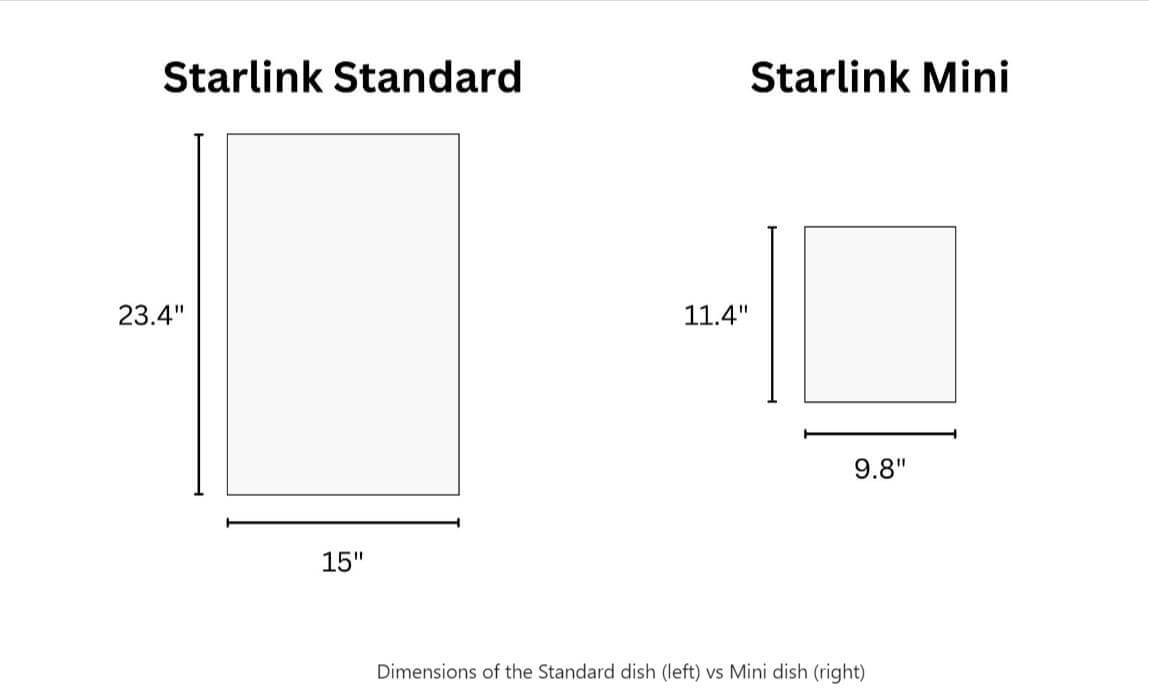
The Standard kit is the bigger, more powerful dish, designed to sit in one place permanently and deliver the fastest speeds Starlink offers. The Mini is smaller, lighter, and far easier to pack up and move, trading some top-end speed and device capacity for portability and low power draw.
Starlink Standard: Built for a Fixed Location
The Standard kit is the option most homes and businesses should be running as their primary internet connection. It uses a larger antenna that pulls in more satellite signal, which generally translates to noticeably higher peak speeds than the Mini can achieve, especially useful in a household running multiple 4K streams, video calls, and smart devices at once. It comes with a separate Wi-Fi router supporting a larger number of connected devices, and is designed to be roof or pole-mounted permanently, much like a traditional antenna installation.
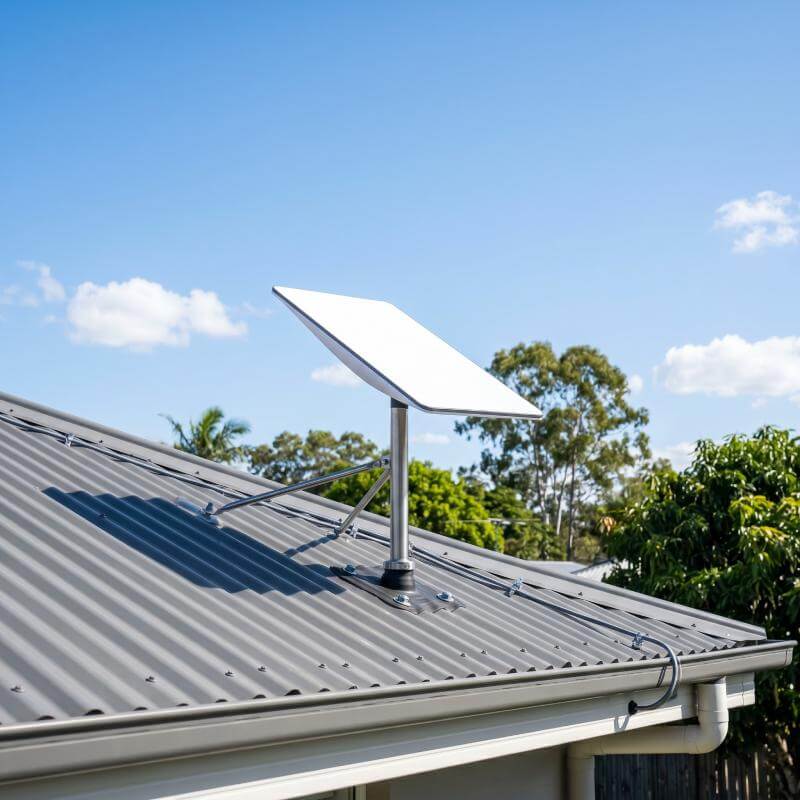
- Best for: homes, offices, farms, and any fixed address needing a full-time internet connection
- Strengths: highest available speeds, handles more connected devices, built to live outdoors long-term
- Trade-off: needs a proper mount, more power draw, and isn’t designed to be packed up and moved regularly
Starlink Mini: Built to Travel
The Mini is roughly half the size and weight of the Standard dish, with the Wi-Fi router built directly into the unit rather than as a separate box. It draws a fraction of the power the Standard kit needs, which matters a great deal if you’re running off a battery, solar set-up, or a caravan’s 12V system. It won’t match the Standard’s top speeds, and its built-in Wi-Fi struggles once you push well past a dozen or so devices connected at once, but for one or two people needing solid internet on the move, it’s a genuinely impressive piece of kit.
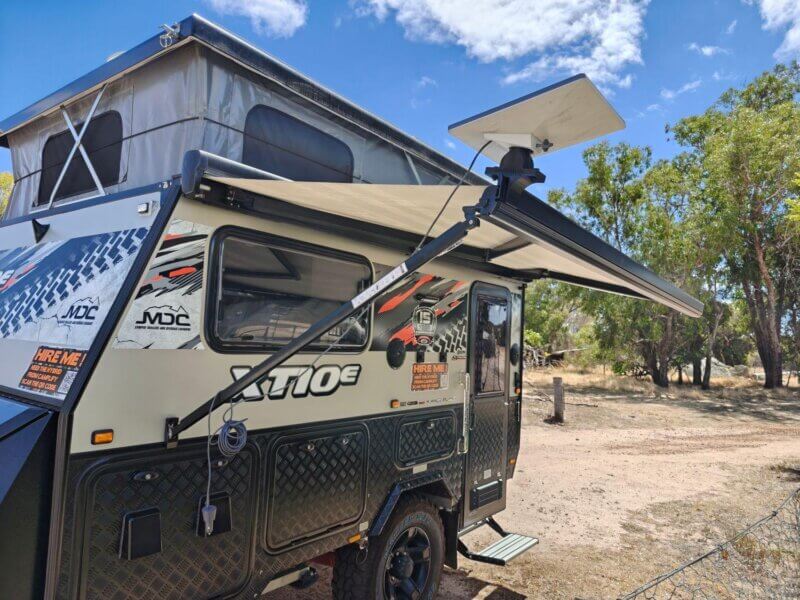
- Best for: caravans, camping, tradies and remote workers moving between sites, weekenders and holiday houses used occasionally
- Strengths: compact, lightweight, low power draw, quick to set up and pack away
- Trade-off: lower peak speeds and device capacity than the Standard kit
Matching the Kit to Your Situation
- Home internet or NBN replacement: Standard kit, professionally mounted for the best signal and longest service life
- Small business or office: Standard kit, particularly if multiple staff are online at once or you rely on cloud-based systems
- Caravan, camping or weekends away: Mini kit, for its portability and low power draw
- Holiday home used occasionally: either can work, but the Mini suits a place you’re not visiting full-time
- Remote work sites or mobile trades: Mini kit for quick relocation between jobs, or Standard where a site is fixed for an extended period
Getting It Set Up Properly
Whichever kit suits your situation, how it’s mounted and cabled makes a real difference to signal quality and reliability. A poorly positioned dish, an obstructed view of the sky, or a rushed cable run can all undercut what the hardware is capable of. Our technicians can install and mount either kit properly, including running data points where needed, so you get the performance you’re paying for from day one.
Book a Jim’s Antennas Technician
Not sure which kit suits your place, business or set-up? Book a Jim’s Antennas technician for a proper Starlink installation, with mount, cabling, and set-up done right the first time. Call 131 546 or book online at jimsantennas.com.au.