Mesh Wi-Fi vs Hardwire Data Cable: How Do the Speeds Compare?
If you are choosing between mesh WiFi and a hardwired data cable, here is the short answer. A hardwired connection between your access points will almost always deliver faster speeds, lower latency, and a more stable connection than wireless backhaul.
Mesh WiFi is convenient and works well for most homes. But if you have a high speed NBN and you want to get the absolute most out of it, structured data cabling is the better option.
Recently, our team at Jim’s Antennas assisted a customer in Melbourne who had just upgraded to Fibre to the Home on the NBN with speeds of 500/50 Mbps. What we found is a perfect real world example of how mesh WiFi compares to hardwired data points.
The Setup: Fibre to the Home with Eero 7 Pro
The customer had upgraded their NBN connection to 500/50 Mbps through Leaptel. As part of the upgrade, they were supplied with Amazon Eero 7 and Eero 7 Pro hardware.
Eero is a mesh Wi-Fi system. That means you use multiple devices, also known as access points, placed around the home to improve coverage.
These units can connect to each other either:
- Wirelessly, known as wireless backhaul
- Via a physical network cable, known as wired backhaul
The home was a double storey, medium sized property. The NBN connection point was located at the back of the house in the study.
To get strong coverage throughout the home, especially towards the front bedrooms, multiple access points were needed.
We started by connecting the Eero 7 Pro to the NBN connection point and confirmed everything was working correctly.
Testing Wireless Backhaul Speeds
Initially, the system was set up using wireless backhaul. In simple terms, the mesh units were talking to each other over Wi-Fi instead of through a cable.
We tested the speed in the master bedroom at the front of the home. This was the furthest point from the NBN connection.
The test location was around 10 metres from the hallway access point, through a doorway.
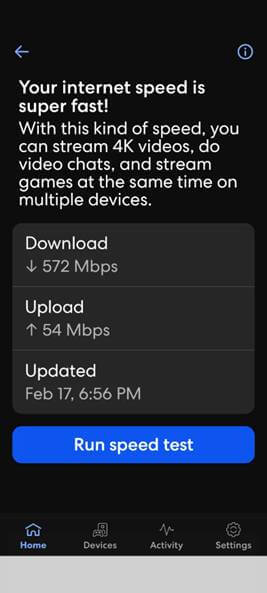
The results showed a significant drop in speed compared to the 500 Mbps available at the source.
To be clear, the wireless speeds were still more than adequate for streaming, browsing, and general home use.
Most families would be perfectly happy. But this customer regularly works with very large data sets and needed faster and more consistent performance.
Upgrading to a Hardwired Cat 6 Data Cable
To improve performance, we recommended installing a Cat 6 data cable between the access points.
Cat 6 is a high quality network cable designed to handle gigabit speeds and beyond. It provides a direct, stable pathway for data between devices.
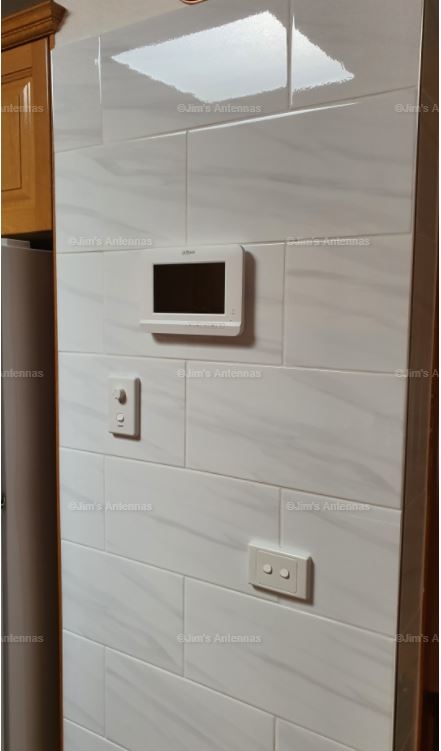
We were able to access under the house, run the cable neatly, and install a professional wall plate for a clean finish.
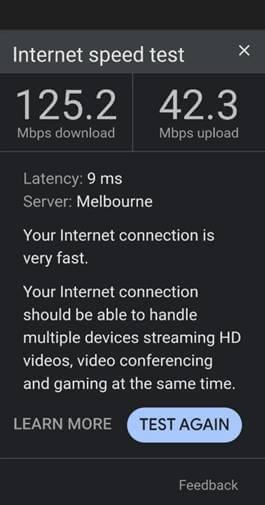
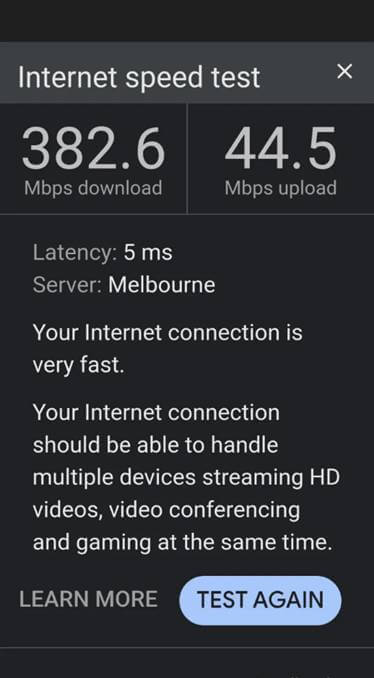
After switching the mesh system to wired backhaul, we tested again.
The result was a three times increase in download speed at the same testing location, along with improved latency.
When standing right next to the access point, speeds exceeded 500 Mbps.
The only reason the bedroom test did not show the full 500 Mbps was due to normal Wi-Fi signal loss over distance.
Why Does Hardwired Backhaul Perform Better?
1. Less Signal Loss
Wireless backhaul shares the same airspace as your phones, laptops, and smart TVs. Walls, doors, and distance all reduce signal strength.
A hardwired connection does not suffer from these issues.
2. More Available Bandwith
When mesh units connect wirelessly, part of the WiFi capacity is used just to communicate between access points. This reduces what is left for your devices.
With a wired backhaul, the cable handles that communication. Your WiFi network is free to focus on delivering speed to your devices.
3. Lower Latency
Latency is the delay between sending and receiving data. This matters for video calls, gaming, cloud backups, and large file transfers.
In this case, the hardwired setup delivered noticeably improved latency, which was essential for the customer’s work.
Is Mesh Still Worth It?
Absolutely!
Mesh WiFi is an excellent solution for improving coverage in larger homes, double storey properties, and homes where the NBN connection point is in an awkward location.
If running data cables is not practical, wireless backhaul will still give you strong and reliable coverage. For everyday use, it is often more than enough.
But if you are paying for high speed NBN like 250 Mbps, 500 Mbps, or even gigabit plans, you should consider structured data cabling to unlock the full potential of your connection.
Mesh Wi-Fi vs Hardwired Data Point: The Verdict
If speed, stability, and performance are your top priorities, a hardwired data cable between access points is the best option. Wireless mesh is convenient and flexible. Hardwired backhaul is faster and more consistent. The right choice depends on your home layout, your budget, and how you use your internet.
Why Professional Data Cabling Matters
Installing a Cat 6 data cable is not just about running a wire from A to B. It involves:
- Correct cable selection
- Proper routing and securing
- Neat wall plates and terminations
- Testing for performance and compliance
Poor installation can limit speeds, create faults, or look messy.
At Jim’s Antennas, we specialise in professional data cabling, Wi-Fi setup, and NBN optimisation. We assess your home, test real world speeds, and recommend the best solution for your needs.
If you have upgraded your NBN and feel like you are not getting the speeds you are paying for, it may not be the plan. It could be your internal network.
Book a professional assessment with Jim’s Antennas and make sure your home network is built to perform.

Contact Jim’s Antennas
Website: www.jimsantennas.com.au
Phone: 131 546
Book a technician today and enjoy fast, reliable W-iFi throughout your home or business.